Fishing Guide ThunderOnTheGulf: A Straight-Talk Guide to Booking, Planning, and Fishing the Gulf Coast
If you’ve searched for a fishing guide thunderonthegulf online, you’ve probably noticed the same problem I did — pages full of bullet lists that say almost nothing. “Redfish are powerful fighters.” “Book early for the best season.” None of that tells you what a real trip costs, which state’s rules apply to you, or how to tell a legitimate captain from someone who just bought a boat last spring.
What a Fishing Guide ThunderOnTheGulf Trip Actually Involves
A guided trip along the Gulf Coast isn’t a mystery box. A legitimate fishing guide thunderonthegulf operation typically includes:
- A licensed captain (U.S. Coast Guard credentialed for hire)
- A boat rated and insured for paying passengers
- All rods, reels, tackle, and bait
- Fishing license coverage under the captain’s group license (varies by state — confirm before booking)
- Ice, coolers, and often fish-cleaning at the end of the trip
What it usually does not include: food, drinks (bring your own water and snacks), fuel surcharges on long offshore runs, and gratuity — plan to tip 15–20% for a good trip, same as you would a good server.
How to Choose a Legitimate Guide (Not Just the First Google Result)
This is the part most competing pages skip entirely. Booking blind is how people end up on a boat with no insurance and a captain who’s never actually filed a float plan.
Checklist Before You Book
| What to Check | Why It Matters |
|---|---|
| USCG Captain’s License (OUPV/6-pack or Masters) | Confirms legal authority to carry paying passengers |
| Liability insurance | Protects you if there’s an accident on board |
| Recent reviews (last 6–12 months) | Older reviews don’t reflect current boat condition or captain availability |
| Clear cancellation/weather policy | Avoids disputes if a trip gets scrubbed for storms |
| Named boat and dock location | Vague operations (“we’ll text you the meeting spot”) are a red flag |
| Catch photos with dates | Confirms they’re actively fishing, not just running ads |
Red Flags to Walk Away From
- No license number listed anywhere on their site or socials
- Prices dramatically below the local average (often means unlicensed or uninsured)
- No cancellation policy in writing
- Pressure to pay the full amount in cash upfront with no deposit structure
State-by-State Breakdown for the Gulf Coast
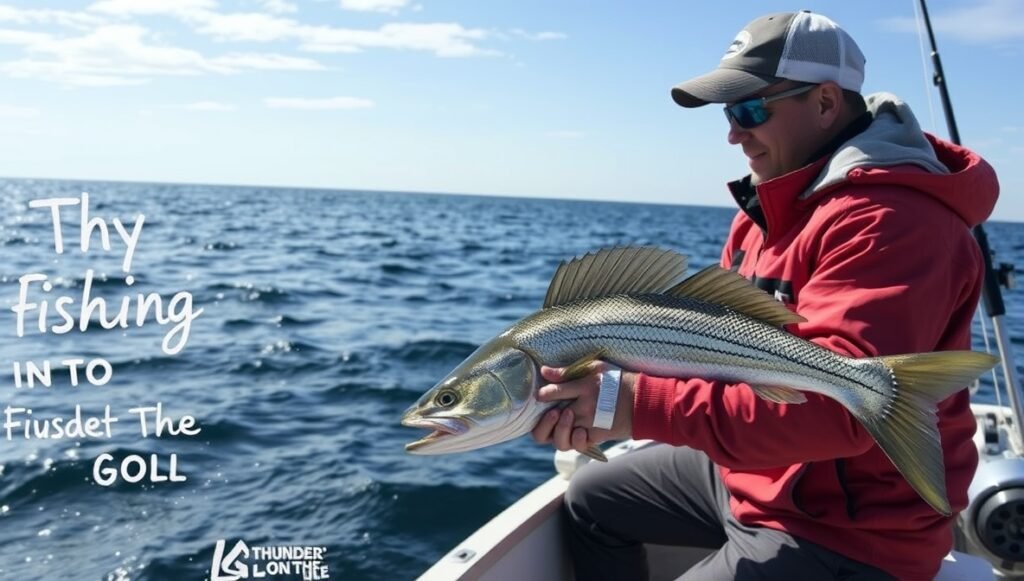
“The Gulf Coast” isn’t one fishery — it’s five states with different rules, different peak seasons, and different signature species. Any fishing guide thunderonthegulf search should really be narrowed down to a state before you book. family fish thunderonthegulf
Florida
Florida has the most regulated inshore fishery on the Gulf side.
- License: Required for residents and non-residents unless fishing with a captain who holds a valid charter license (confirm coverage before the trip)
- Signature species: Redfish, speckled trout, snook, tarpon
- Best season: Fall (October–November) for redfish and trout activity
- Note: Snook and redfish both have strict slot limits that change by region — always confirm current limits with FWC before keeping fish
Alabama
- License: Saltwater fishing license required for anyone 16+ unless the captain’s license covers the party
- Signature species: Red snapper, king mackerel, speckled trout
- Best season: June–July for red snapper (federal season is short and date-specific — check NOAA Fisheries before planning around it)
Mississippi
- License: Non-resident saltwater license required unless fishing under a licensed guide
- Signature species: Speckled trout, flounder, redfish
- Best season: Spring and fall for inshore trout and redfish
Louisiana
- License: Basic Fishing License plus a Saltwater License required for non-residents; charters typically handle this
- Signature species: Redfish, black drum, speckled trout — Louisiana’s marsh system is considered one of the best redfish fisheries in the country
- Best season: Fall through winter, when redfish push into the marshes in big numbers
Texas
- License: All-Water Fishing License with a Saltwater Endorsement required
- Signature species: Redfish, speckled trout, flounder
- Best season: Fall for the flounder run near passes and jetties
Real Pricing for a Fishing Guide ThunderOnTheGulf Style Charter
Nobody in the current search results gives you numbers. Here’s what a realistic trip actually costs across the Gulf states in 2026:
| Trip Type | Duration | Typical Price Range | Group Size |
|---|---|---|---|
| Inshore half-day | 4 hours | $350–$550 | 1–3 anglers |
| Inshore full-day | 8 hours | $600–$900 | 1–4 anglers |
| Nearshore/reef trip | 6 hours | $700–$1,000 | Up to 4 anglers |
| Offshore full-day | 8–10 hours | $1,200–$2,500+ | Up to 6 anglers |
| Shared/party boat | 4–6 hours | $75–$150 per person | Large group |
Prices vary by state, boat size, and how far offshore you’re heading. Offshore trips cost more mainly because of fuel — a 40-mile run to reef structure burns significantly more than an inshore run through a marsh.
Species You’ll Actually Target — With Real Detail
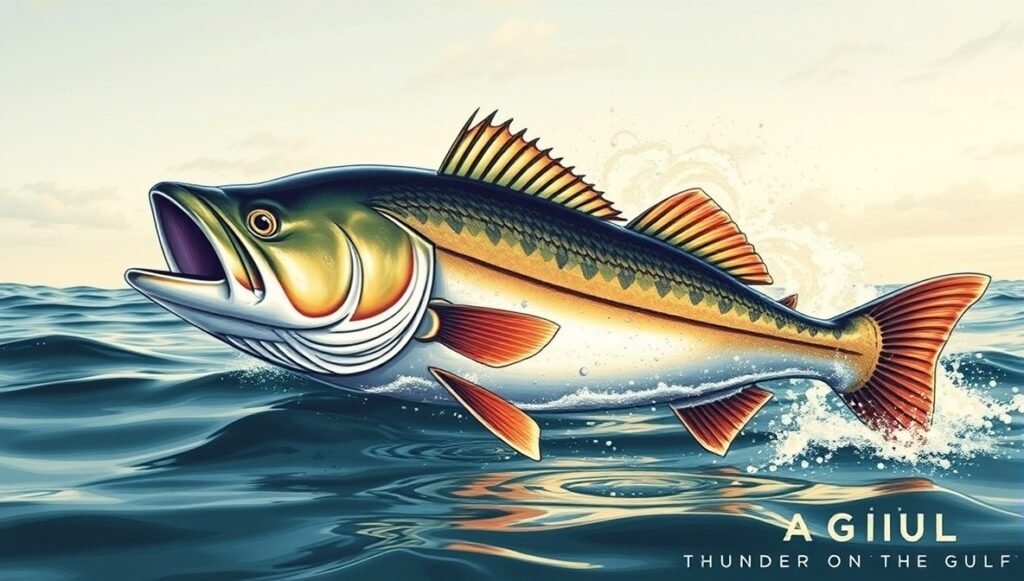
Most guides online list species with zero context. Here’s what actually matters for each one.
Redfish
Redfish are the backbone of Gulf inshore fishing. They hold in grass flats, oyster beds, and marsh edges, and they’re aggressive enough that beginners land them consistently.
- Best rig: 20lb braided line with a 20–30lb fluorocarbon leader, size 2/0–4/0 circle hook
- Best bait: Live shrimp under a popping cork, or a gold spoon in murky water
- Slot limits: Vary by state (commonly 18–27 inches, but always confirm current numbers — these change)
Speckled Trout
Trout school tighter than redfish and respond well to first-light fishing.
- Best rig: Light spinning setup, 10–15lb line
- Best bait: Live shrimp or a soft plastic paddle tail worked slowly over grass beds
- Timing: Early morning, before boat traffic pushes them deeper
Red Snapper
Federally regulated with short, specific open seasons.
- Best rig: Heavy conventional setup, 50–80lb line, weighted circle hook near structure
- Timing: Always check NOAA’s current federal season dates — they change annually and can close early once quota is met
Flounder
Flounder sit flat on sandy or muddy bottom and ambush bait, so presentation matters more than speed.
- Best rig: Light jighead with a soft plastic or live finger mullet, worked slow along the bottom
- Best season: Fall migration run, especially near passes
A Real Trip Timeline
Here’s what an actual day on a fishing guide thunderonthegulf style charter looks like, hour by hour:
- 5:30–6:00 AM — Meet at the dock, safety briefing, gear check
- 6:00–6:30 AM — Run out to the first spot while light is still low
- 6:30–10:00 AM — Primary fishing window (this is when bite activity is highest)
- 10:00–11:00 AM — Move spots based on tide change or bite slowdown
- 11:00 AM–12:00 PM — Final push, often targeting a different species as the tide shifts
- 12:00 PM — Return to dock, fish cleaning, photos
Morning trips consistently outperform afternoon trips because fish feed more actively before water temperatures climb and boat traffic increases.
Gear You Should Bring (Even With a Guide)
Most charters supply rods, reels, and bait, but you should still bring your own:
- Polarized sunglasses (cuts glare, helps you spot fish in the shallows)
- Non-marking, non-slip shoes
- Reef-safe sunscreen
- A light long-sleeve shirt for sun protection
- Motion sickness prevention if you’re prone to it, especially for offshore trips
- A dry bag for your phone and wallet
Weather and Safety Considerations
Gulf weather changes fast, especially in summer. A responsible fishing guide thunderonthegulf operation will:
- Monitor NOAA marine forecasts the morning of the trip
- Reschedule (not push through) if lightning or small craft advisories are active
- Carry a VHF radio, not just a cell phone, for offshore trips
- File a float plan with the marina or dock for longer offshore runs
Hurricane season runs June through November across the entire Gulf Coast. If you’re booking a trip during this window, confirm the operator’s cancellation and rescheduling policy in writing before you pay a deposit.
Conservation Practices Worth Knowing
Good captains follow — and explain — conservation basics that protect the fishery long-term:
- Circle hooks reduce deep-hooking and improve catch-and-release survival
- Descending devices help fish caught from deep water avoid barotrauma when released
- Seagrass beds should never be anchored through or run over at low tide
- Undersized or out-of-slot fish should be released quickly, with wet hands and minimal air exposure
Any legitimate fishing guide thunderonthegulf operator should be able to explain these practices without being asked twice.
Frequently Asked Questions
Do I need my own fishing license for a guided trip?
Usually not. Most licensed charters cover you under their group fishing license, but always confirm this directly with the captain before the trip.
What’s the best month to book a fishing guide thunderonthegulf trip?
Fall (September–November) generally offers the best combination of comfortable weather and strong inshore activity across most Gulf states.
How far in advance should I book?
Book 3–6 weeks ahead for peak season (spring and fall), and 1–2 weeks ahead during summer or winter when demand is lower.
Is Gulf Coast fishing good for beginners?
Yes. Inshore trips targeting redfish and trout require minimal experience, and a good guide will handle rigging, bait, and technique on the boat.
What happens if the weather is bad on trip day?
Reputable captains reschedule rather than fish through dangerous conditions. Confirm the operator’s weather policy before booking so you know what to expect.
How much should I tip a fishing guide?
15–20% of the trip cost is standard for good service, similar to tipping norms in other service industries.
Can kids come on a guided trip?
Yes, most inshore charters welcome kids, especially on half-day trips. Ask about minimum age requirements, since they vary by operator and boat type.
Booking a fishing guide thunderonthegulf trip doesn’t have to be a guessing game. Once you know the real costs, the state-specific rules, and what a legitimate operator actually looks like, you can plan a trip that matches your budget, your target species, and your experience level — instead of relying on generic advice that could apply to any coastline in the country.